Plumbing
Burst Pipe at Home? What to Do Before an Emergency Plumber Arrives
A calm, practical checklist for stopping the water, protecting your Torbay home and giving an emergency plumber the information they need.

A burst pipe can turn a normal day into a stressful one very quickly. The priority is not to diagnose every detail or attempt a perfect repair. It is to stop more water entering the property, stay clear of electrical danger and limit the damage until suitable help arrives.
If water is moving through a ceiling, collecting around sockets or spreading faster than you can contain it, treat the situation as urgent. Keep children and pets away from the affected area and work through the steps below only when it is safe to do so.
1. Turn off the water at the internal stop tap
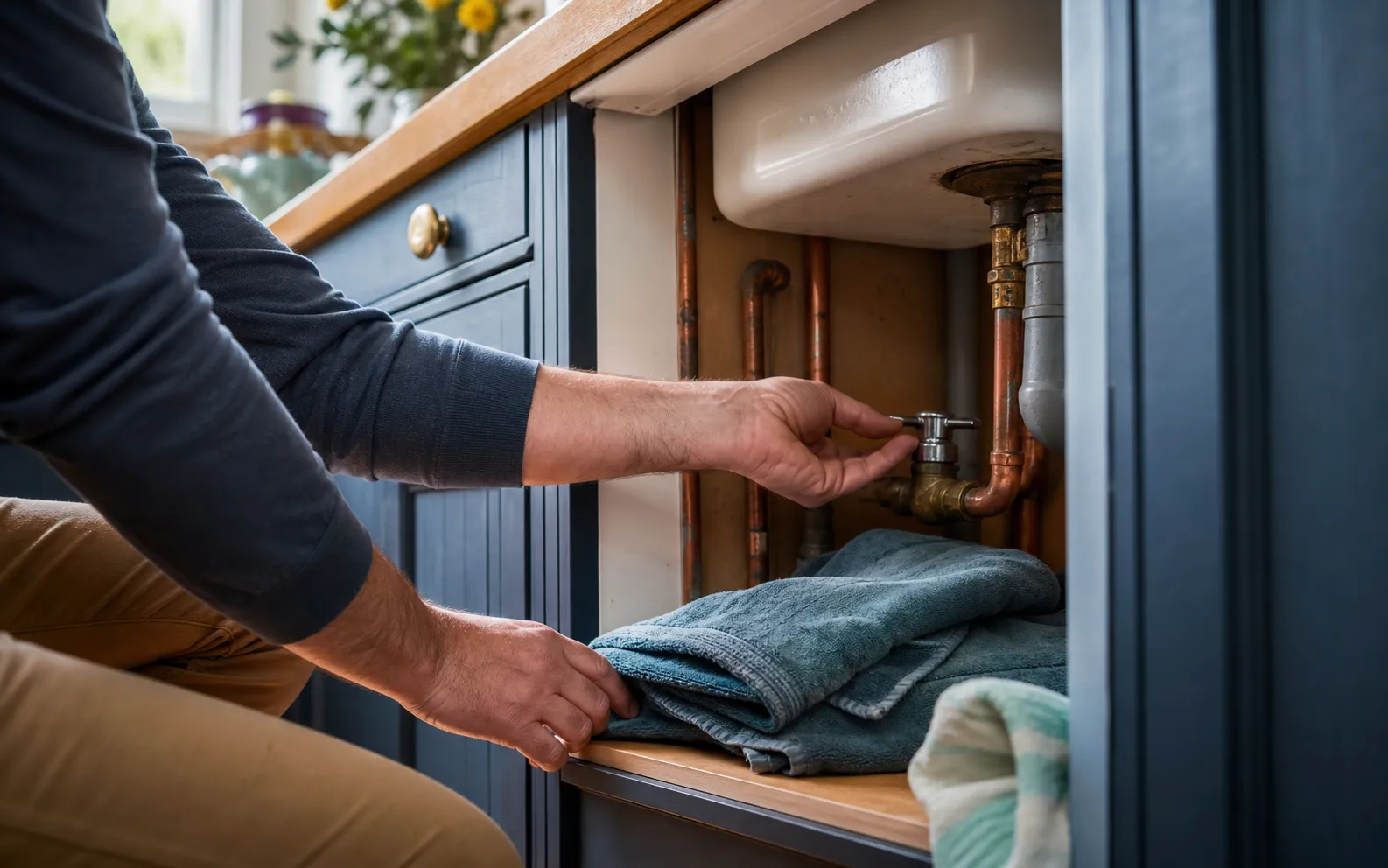
The internal stop tap controls the mains water entering your home. It is often beneath the kitchen sink, although it can be in a utility room, downstairs cupboard, garage, cellar or under the stairs. A traditional screw-down stop tap normally closes by turning it clockwise. A lever valve is usually closed when the lever sits across the pipe rather than in line with it.
Turn it firmly but do not force a valve that will not move. Excessive pressure can damage an old or seized fitting and create another leak. If you cannot find or operate the stop tap, tell the plumber immediately. Your outside stop valve may be an alternative, but it can serve more than one property and may require the water company or a suitable professional to operate it.
WaterSafe’s burst-pipe guidance also places shutting off the water first. Knowing the valve’s position before an emergency makes this step much easier.
2. Make the electrics your next safety check
Water and electricity are a dangerous combination. If water is close to sockets, lights, appliances, the boiler or the consumer unit, do not touch wet equipment. Do not walk through standing water to reach a switch.
When the consumer unit is dry and safely accessible, you can switch off the affected circuit or the main supply. If reaching it would put you near water, leave the area and call for professional advice. A plumber can stop the leak, but water-damaged electrical equipment may also need assessment by a qualified electrician before it is used again.
Never assume that a light or socket is safe simply because it still works.
3. Switch off the heating and drain the remaining water
Turn off the boiler or central-heating system. Once the mains supply is isolated, open cold taps to release water and pressure remaining in the pipework. Then open the hot taps. Start downstairs where practical, keeping containers beneath outlets if drainage is limited.
Do not switch the boiler back on until the plumbing has been repaired, the system is ready to refill and any water near electrical components has been checked. If you have a hot-water cylinder or a system you do not recognise, explain that when arranging help rather than experimenting with unfamiliar valves.
4. Contain the water without taking risks
Use buckets, bowls and absorbent towels to catch or divert water. Move rugs, furniture, electronics and other belongings out of its path. A plastic sheet can sometimes guide a steady drip into a container, but do not puncture a bulging ceiling or remove fittings unless a competent professional has advised you to do so.
A ceiling holding water can fail without warning. Keep clear of sagging plaster, move people out of the room and avoid standing directly beneath it. The same caution applies to swollen cabinets and saturated plasterboard.
If the leak is small and the pipe is safely accessible, a proprietary repair tape or clamp may reduce the flow temporarily. It is not a permanent repair and should never be used as a reason to restore the mains before the damaged section has been assessed.
5. Record useful details for the plumber and insurer
Once the immediate flow is controlled, take photographs or a short video from a safe position. Record:
- where the water first appeared;
- which valve you closed and whether it stopped the flow;
- whether the heating and electricity are off;
- any visible split, failed joint or damaged appliance;
- how long the leak may have been running; and
- rooms or belongings affected.
This information helps the plumber arrive prepared and creates a simple record if you contact your home insurer. Keep receipts for emergency work, drying equipment and necessary temporary accommodation. Check the terms of your own policy rather than assuming every cost is covered.
6. Give the emergency plumber a clear description
When you call, lead with the essential facts: your location, whether the mains is off, the rate and position of the leak, and any electrical or ceiling hazard. Mention access restrictions, vulnerable occupants and whether water is affecting another property.
A useful description is more valuable than guessing the failed component. For example: “The water is off at the stop tap, but water is still dripping through the kitchen ceiling below the bathroom.” That tells the plumber far more than “the boiler has burst” when the source is uncertain.
If you need help finding a suitable local professional, explore our plumbing services and explain that the job is urgent.
After the pipe is repaired
Stopping the visible leak is only the first part of recovery. Wet insulation, flooring, cabinetry and plaster can hold moisture after the surface looks dry. Ventilate the property when it is secure and safe, and follow professional drying advice. Watch for staining, lifting floor finishes, persistent damp smells or changes around electrical fittings.
Ask the plumber what failed and whether nearby pipework shows the same weakness. Common causes include freezing in unheated spaces, corrosion, accidental damage, excessive pressure and a fitting that has worked loose. The right prevention depends on the cause: insulating exposed pipework, fixing small leaks promptly and periodically checking that the stop tap moves freely are sensible starting points.
Prepare before the next emergency
Take ten minutes on a calm day to locate the stop tap and show other adults in the home. Label it clearly without obstructing access. Keep a torch, a bucket and a few old towels somewhere easy to reach, and store useful contact and insurance details somewhere that does not depend on a single phone.
Fast, safe action cannot prevent every consequence of a burst pipe, but it can significantly limit the amount of water released while help is on the way.
Common questions
Frequently asked questions
Where is the internal stop tap usually located?
It is commonly under the kitchen sink, but it may also be in a downstairs cupboard, utility room, garage, cellar or beneath the stairs.
Should I switch off the electricity after a burst pipe?
Only if water has reached or may reach electrical fittings, and only when you can reach the consumer unit without entering water or touching wet equipment. If it is unsafe, keep away and call the emergency services or a qualified electrician.
Can I repair a burst pipe myself?
A temporary measure may slow a small accessible leak, but a split pipe or failed fitting needs a proper assessment and permanent repair before the water is restored.