Roofing
7 Signs Your Roof May Be Leaking: A Torbay Homeowner’s Checklist
Spot the indoor and ground-level warning signs of a roof leak, understand what they can mean and know when to arrange a safe inspection.

A roof leak does not always begin with water dripping into a room. It may first appear as a faint ceiling mark, a damp smell in the loft or a single displaced slate visible from the garden. Finding the cause early can limit damage to insulation, timber, plaster and decoration.
These seven checks are designed for use inside the home or from ground level. Do not climb onto a roof to investigate. The Health and Safety Executive describes all roof work as highly dangerous and says it must be properly planned and carried out by competent people using suitable precautions.
1. New stains on a ceiling or wall
Brown, yellow or grey marks on an upstairs ceiling are a familiar warning sign. The edge may look darker after rain and fade as the surface dries. Paint can bubble, plaster can soften and wallpaper may lift.
The visible mark is not necessarily directly beneath the entry point. Water can travel along felt, rafters, pipes and ceiling joists before appearing inside. Photograph the stain and lightly mark its edge with a pencil so you can see whether it grows. Note the weather and time rather than repeatedly repainting it.
Not every ceiling stain comes from the roof. A bathroom pipe, overflowing tank, failed seal or condensation can look similar. The pattern helps a professional decide what to inspect first.
2. Damp or compressed loft insulation
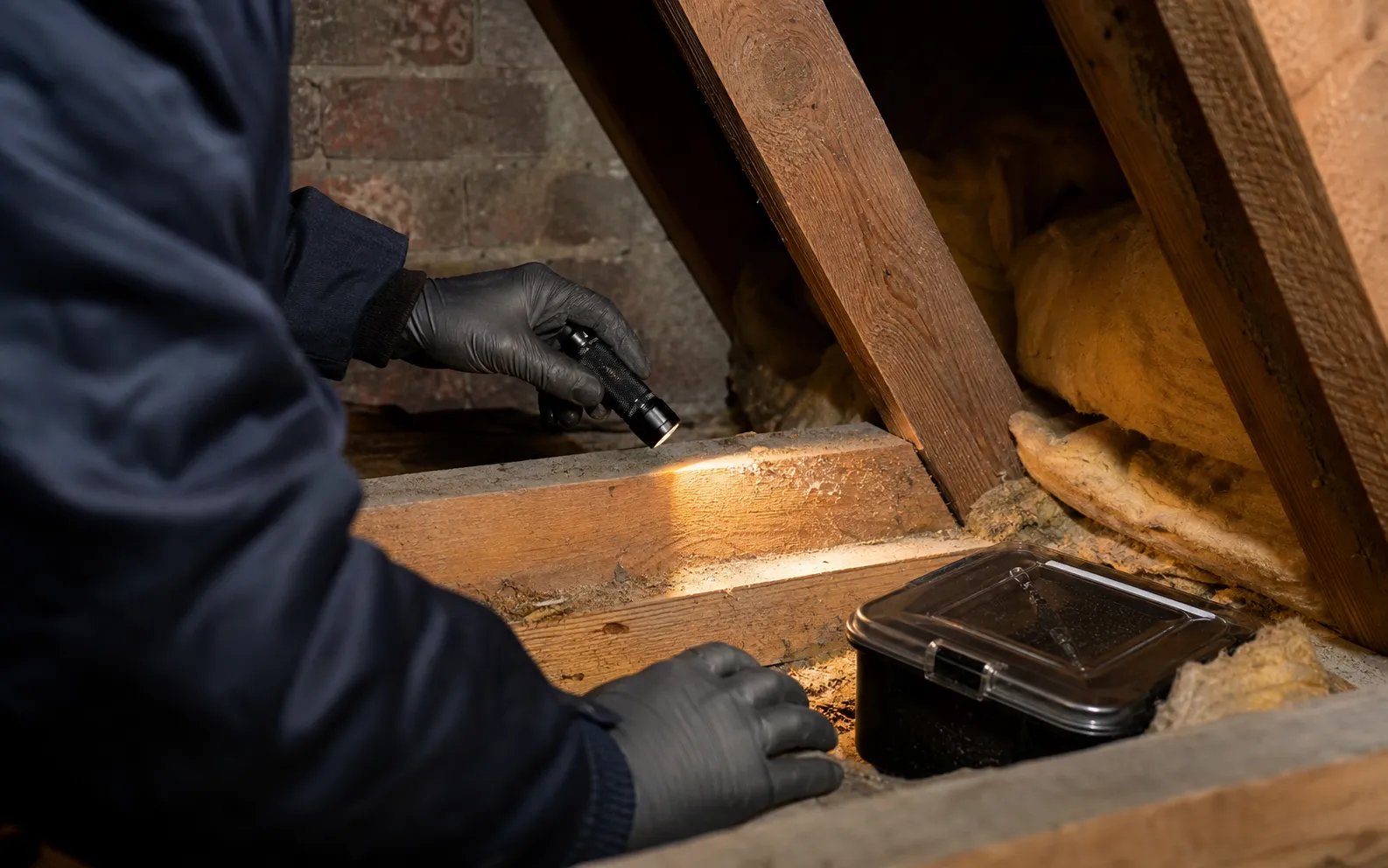
Where the loft is boarded and safely accessible, inspect from the proper walkway with a torch. Do not step between joists or onto insulation. Look for darkened timber, wet underlay, compressed insulation and droplets on fixings.
Condensation often forms more evenly across cold surfaces, while a leak may create a defined wet route or isolated patch. That distinction is not absolute, especially in a poorly ventilated loft. Avoid pulling material apart or approaching wiring when it is wet.
If access is cramped, unboarded or close to damaged electrics, stop and arrange a suitable inspection.
3. A musty smell that returns after rain
A persistent earthy or damp smell in an upstairs room, cupboard or loft can indicate material that is repeatedly becoming wet. The source may be hidden behind a ceiling finish long before a clear mark develops.
Record whether the smell becomes stronger during wind-driven rain, after prolonged steady rain or during cold still weather. That timing can help separate a weather-related leak from condensation or plumbing. Ventilation may reduce the smell but will not fix an external defect.
4. Daylight visible through the roof
From a safe loft position, small points or lines of daylight may suggest a gap in slates, tiles, ridge details or underlay. They deserve investigation, although no visible light does not prove the roof is watertight. Underlay and overlapping materials can conceal the external covering.
Do not poke through a gap or lift the roof covering from inside. You could enlarge the defect or dislodge material onto the ground below. Photograph what you can see and note its position relative to a chimney, roof window or gable.
5. Slipped, cracked or missing slates and tiles
Use binoculars or a camera zoom from a safe place at ground level. Compare the roof slopes for uneven courses, obvious gaps, newly exposed lighter areas or fragments in gutters and on the ground. After strong winds, check the perimeter before walking near the building because loose material may still fall.
One slipped slate can admit more water than its size suggests, particularly when wind drives rain beneath the surrounding courses. Temporary ground-level observation is useful, but do not attempt to push material back from a ladder.
6. Damaged flashing around junctions
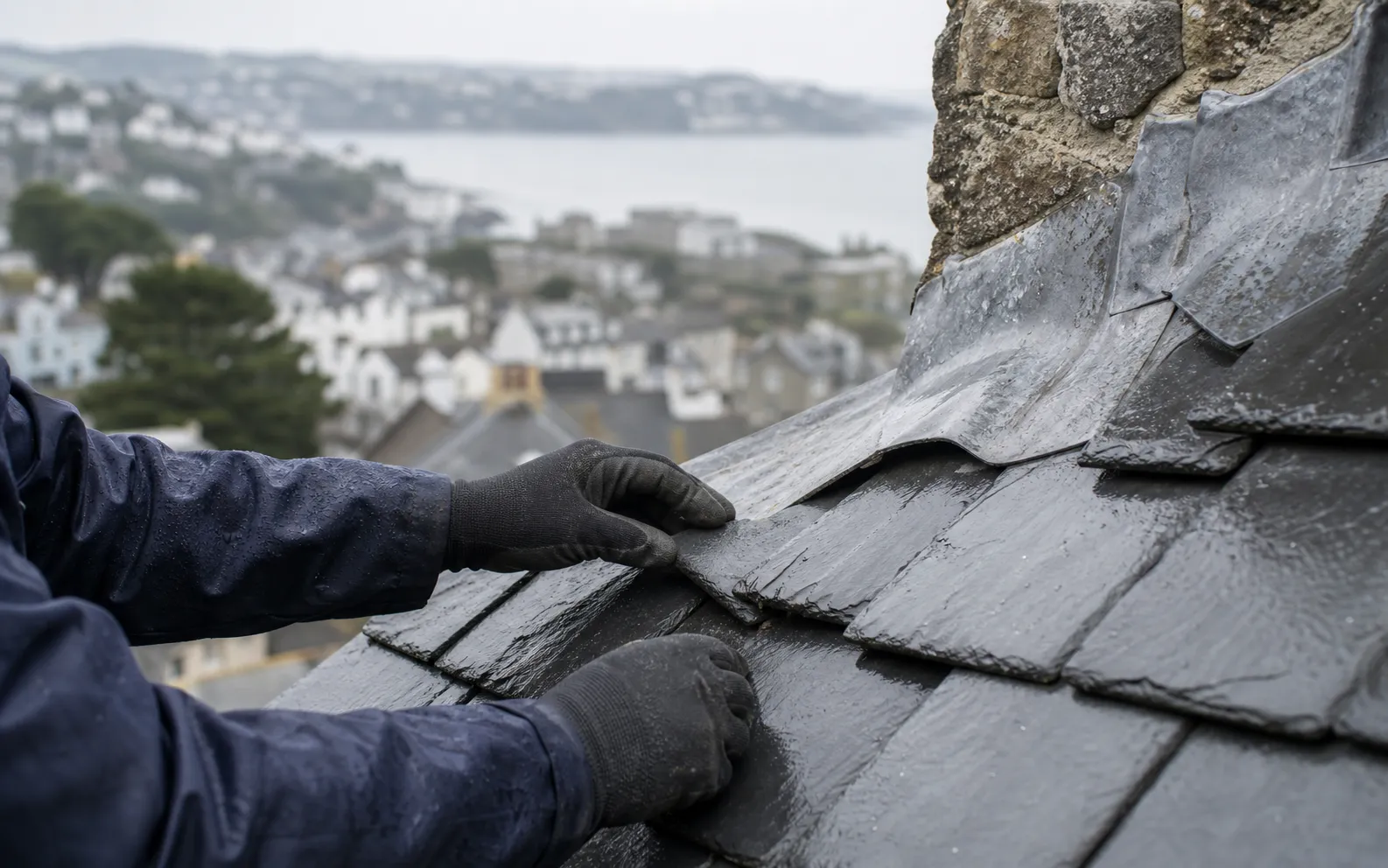
Flashing helps weatherproof the places where a roof meets a chimney, wall, vent or roof window. From the ground, you may spot lifted edges, splits, missing sections or mortar that has cracked away. Water marks below a chimney breast can make this area especially relevant.
The visible flashing is only part of the detail, and a surface coating may hide rather than solve a failed joint. A roofer should inspect how the materials overlap and whether movement, corrosion or an adjacent defect is responsible.
7. Overflowing or poorly aligned gutters
Water spilling behind a gutter can soak fascia boards, walls and roof edges, producing damp that resembles a roof-covering leak. Look during rain from a safe indoor or ground-level position. Signs include water tracking down the wall, vegetation in the gutter, staining at joints and a section that appears to sag.
Blockages are not the only possibility. A cracked union, inadequate fall, damaged outlet or displaced roof-edge detail can also send water in the wrong direction. Avoid leaning a ladder against a wet or unstable gutter.
What to do when you notice a warning sign
Move belongings away from the damp area and place a container beneath an active drip when it is safe. Keep people clear of bulging plaster or a visibly weakened ceiling. If water is near lights, sockets or wiring, do not touch wet equipment; isolate electricity only from a dry, safely accessible consumer unit and seek electrical advice.
Create a simple record for the roofer:
- photographs of the internal mark and any ground-level exterior sign;
- the dates and type of weather when it appears;
- whether the mark is growing;
- the position relative to chimneys, valleys, roof windows and bathrooms; and
- any recent building, aerial, solar or gutter work.
If you are unsure who to contact, tell us what has happened and we can help you think through the right next step.
Why you should not climb up for a closer look
A wet roof can be slippery, and damaged coverings may be fragile. The HSE’s roof-work guidance emphasises safe access, protected edges and competent people. Domestic roof repairs often need more than a ladder.
Photos from ground level and observations from a properly boarded loft are enough for the initial call. A professional can then plan access and inspect the roof covering, underlay, flashings, penetrations, valleys and rainwater goods in context.
After the repair
Ask what caused the leak, what was repaired and whether the surrounding materials were checked. Internal finishes should not be redecorated until they are dry and the source has been proven during suitable weather. Wet insulation or plaster may need separate drying or replacement advice.
Continue photographing the area after rain for a short period. A dry ceiling and stable moisture readings provide better reassurance than a fresh coat of paint. Then add a ground-level roof and gutter check to your seasonal home-maintenance routine, particularly after severe coastal weather.
Common questions
Frequently asked questions
Does a ceiling stain always mean the roof is leaking?
No. Roof coverings are one possible source, but plumbing, condensation and failed seals can produce similar staining. The timing and position of the mark help a professional investigate.
Can I inspect my own roof with a ladder?
The safest homeowner inspection is from inside the loft where access is suitable and from ground level with binoculars or a camera zoom. Roof work is high risk and should be planned and carried out by competent people with appropriate access equipment.
Is a small roof leak urgent?
It should be investigated promptly. A small visible mark may represent water travelling from a different entry point, and repeated wetting can affect insulation, timber, plaster and electrics.