Pest control
Signs of Rats or Mice in Your Torbay Home—and What to Do Next
Learn the common signs of rodent activity, how to inspect safely and when a Torbay pest-control professional should investigate.

Rats and mice are usually active when a home is quiet, so a direct sighting is only one possible clue. Droppings beneath a cupboard, scratching in a loft or damaged food packaging may appear first. Identifying the pattern matters because an isolated old sign needs a different response from fresh evidence appearing every night.
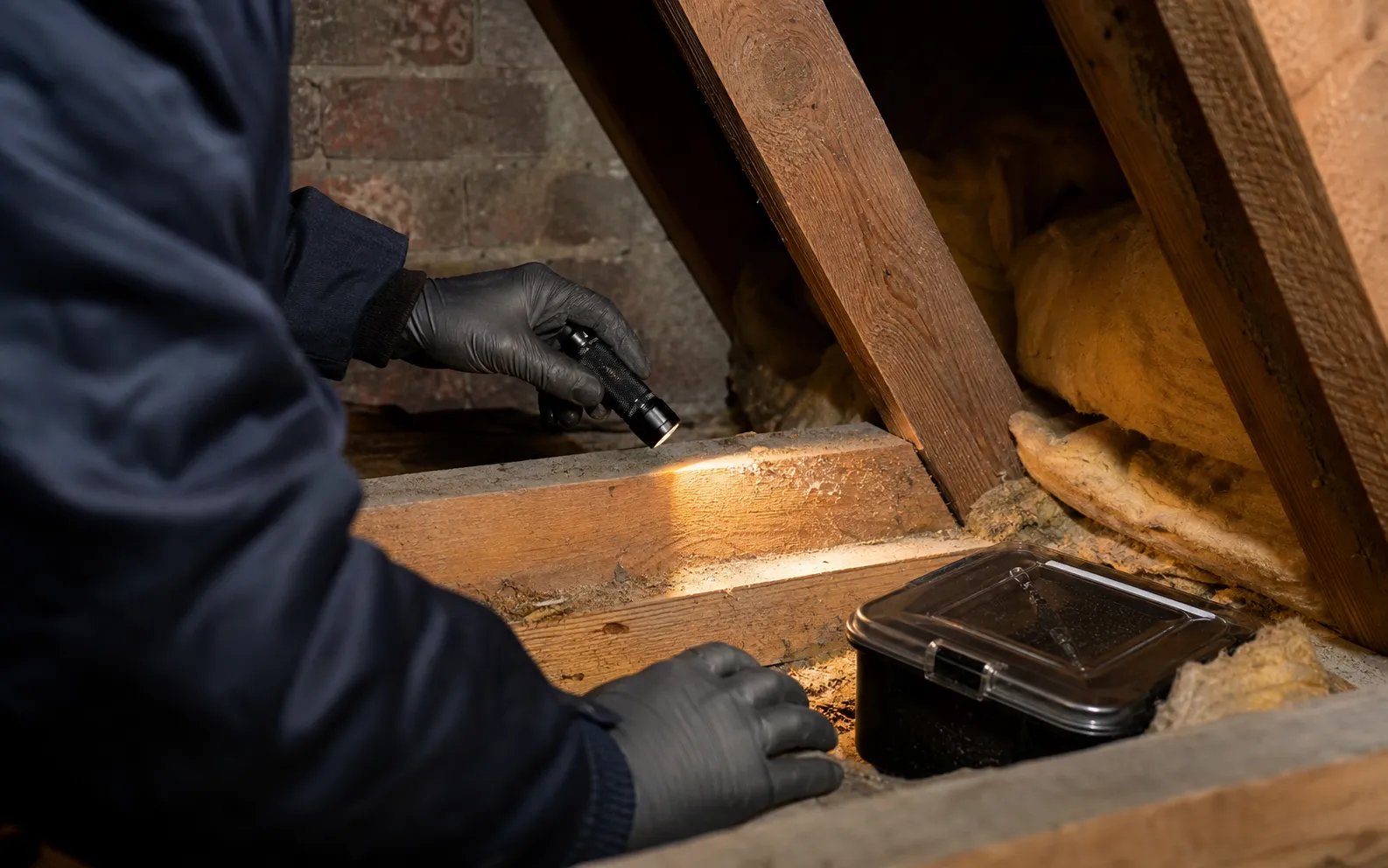
Avoid handling anything immediately. Note where you found it, keep children and pets away and inspect from a sensible distance. A careful record helps a pest professional distinguish likely rodent activity from birds, squirrels, insects or an ordinary building noise.
1. Droppings in sheltered areas
Rodent droppings are often found close to feeding places, nesting areas and regular travel routes. Mouse droppings tend to be small and scattered. Rat droppings are generally larger and may be concentrated in particular locations. Size and shape vary, however, so photographs on the internet are not a reliable diagnosis by themselves.
Look without reaching blindly behind appliances, into loft insulation or beneath floorboards. Fresh-looking material, repeated deposits after an area has been professionally cleaned, or droppings in food-storage areas all deserve prompt attention.
Do not sweep or vacuum suspected droppings. UK Health Security Agency guidance warns that disturbing rodent urine, droppings or nesting material can put contaminated particles into the air. Keep the area undisturbed until you have safe cleaning advice.
2. Gnaw marks and damaged materials
Rats and mice gnaw materials as they explore and maintain their teeth. Possible signs include:
- small tooth marks on food packets or storage containers;
- shredded paper, fabric or insulation;
- damage around the edges of doors and cupboards;
- marks on timber, plastic pipe or cable coverings; and
- holes that look newly enlarged around an existing gap.
Damage to an electrical cable needs particular care. Do not handle or energise visibly damaged wiring. Isolate the circuit only if you can do so safely and ask a qualified electrician to assess it.
3. Noises after dark
Scratching, scurrying or light gnawing in a wall, ceiling or loft can suggest an animal moving through the building. Record the time, duration and location rather than hitting the surface or opening it immediately. Rats, mice, birds and squirrels can sound surprisingly similar through plasterboard.
Rodent noises often follow repeatable routes and are most noticeable overnight. A single sound during windy weather may instead come from a loose fitting, tree branch or roof component. Several nights of activity in the same area make a structured inspection more useful.
4. Smears, tracks and repeated routes
Rodents tend to travel close to edges and cover. Repeated movement can leave dusty tracks, footprints or dark smear marks along walls, pipes and gaps. You may also notice disturbed insulation or a narrow route through stored items.
Do not scatter flour, powders or tracking products in a living space. They can create another cleaning problem and may expose children or pets. A professional can choose an appropriate monitoring method and position it where it will provide useful evidence.
5. Unusual smells
A persistent stale or ammonia-like smell can accompany established activity, particularly in enclosed cupboards, lofts or wall voids. Smell alone is not proof: drains, damp materials, stored fabrics and electrical faults can produce other unusual odours.
If the smell is accompanied by droppings, gnawing or noise, note each location. If you smell burning or hot plastic, treat it as a possible electrical emergency rather than assuming it is pest-related.
6. Burrows or holes outside
The source may be outside the room where you first notice evidence. Check the garden and accessible exterior from ground level for disturbed soil near sheds, decking, compost, drains and dense vegetation. Look at gaps around service pipes, damaged air bricks and the bottom of doors.
Do not seal an active entry point immediately without a control plan. Trapping an animal inside can move the activity to a different part of the building. Proofing is most effective after the species, route and extent of the problem have been assessed.
What to do when you find possible evidence
Start with low-risk practical steps:
- Photograph the sign without touching or moving it.
- Record the room, exact position, date and time.
- Put open food, bird seed and pet food into robust sealed containers.
- Clean ordinary food spills while leaving suspected contaminated material undisturbed.
- Close bin lids and remove easy food sources from the garden.
- Keep pets and children away from the affected space.
- Arrange an inspection when evidence is fresh, repeated or widespread.
Avoid placing loose poison around the home. Rodenticides are regulated biocidal products and must be used according to their authorisation and label. The Health and Safety Executive notes that control can combine hygiene, physical barriers, traps and authorised products. A considered approach reduces risks to people, pets and non-target wildlife.
When professional pest control is sensible
Arrange help promptly when you find repeated fresh droppings, hear continuing activity, see cable damage, find evidence in more than one room, or cannot safely access the suspected area. Commercial food premises and rented properties may also have reporting or management responsibilities that should not be delayed.
A useful inspection should look beyond putting down a trap. It should consider the likely species, entry points, food and water sources, nesting or harbourage areas, risks to occupants, suitable control options and proofing work needed afterwards.
Our pest-control services can help you describe the problem and find the appropriate next step.
Preventing a repeat problem
Once activity has been controlled, focus on food, shelter and access. Store food securely, keep bins closed, clear spilled bird feed, avoid leaving pet food overnight and reduce undisturbed clutter. Repair gaps using materials suited to the building and location; expanding foam alone is rarely a durable answer where an animal can gnaw it.
Keep a short monitoring period after treatment. The absence of a sighting is encouraging, but the better measure is whether fresh droppings, noise, gnawing or monitoring evidence has stopped. Prevention works best as a routine property-maintenance task rather than a one-off reaction.
Common questions
Frequently asked questions
Does one mouse mean there is an infestation?
One sighting does not reveal the size of a problem, but it is enough reason to look for further signs and remove access to food. Rodents are often hidden, so repeated evidence should be investigated.
Should I vacuum rodent droppings?
No. UKHSA guidance advises against sweeping or vacuuming rodent urine, droppings or nests because contaminated material can become airborne.
Can rats and mice enter through small gaps?
Yes. Both can use surprisingly small defects around pipes, doors, roofs and air bricks, so proofing should follow a proper inspection rather than focusing only on the room where signs appeared.